Include the parts students need to predict
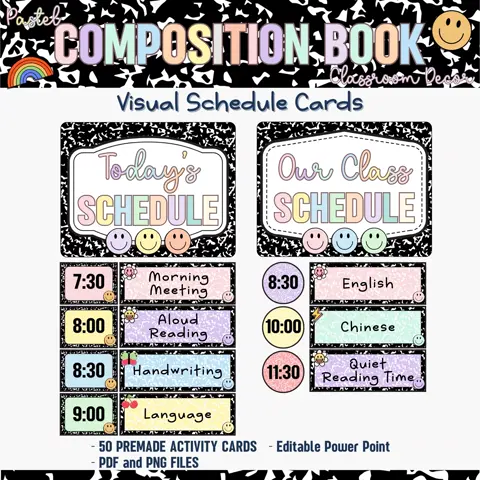
List the major blocks of the day in language students understand. Younger learners may benefit from familiar icons paired with words, while older students may need times, class periods, locations, or materials. The schedule should answer what is happening now and what comes next.
Avoid adding tiny details that change constantly. A schedule becomes harder to use when students must sort through too much information to find the next important event.
Place it where students can use it
Choose a location visible from common learning areas and consider the eye level of your students. If students update the schedule, keep movable pieces within reach and store extras nearby.
Use strong contrast, readable type, and consistent card shapes. Test the schedule from the farthest student seat and simplify any section that cannot be read quickly.
Teach students how to reference it
Introduce the schedule as a tool rather than background decoration. Review it at the start of the day, point out unusual events, and refer students back to it when they ask what happens next.
Model how changes will appear. A moved card, change symbol, or brief note can make an unexpected assembly or delayed activity easier to understand.
Keep the schedule accurate
An outdated visual schedule can create more confusion than no schedule at all. Assign a quick morning check to yourself or a student helper and update changes as soon as they are known.
Prepare a small set of flexible cards for testing, visitors, celebrations, indoor recess, and schedule changes. Reusable pieces let you respond quickly without making handwritten additions that are difficult to read.