Define what a helpful shout-out includes
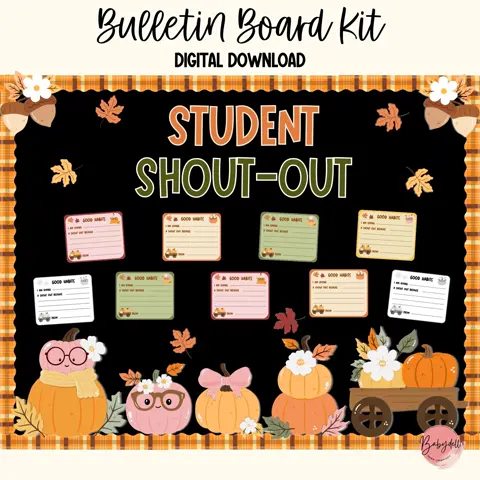
Teach students to name a specific action and its positive effect. Thank you for helping me find the right page is more meaningful than You are nice. A simple structure keeps notes sincere and helps students notice behaviors that strengthen the classroom.
Create examples together and discuss privacy, respectful language, and appropriate topics. Make it clear that the board is for recognition, not popularity, jokes, or comparing the number of notes each person receives.
Build an easy fall-themed system
Use leaves, acorns, apples, pumpkins, or warm-colored cards for written notes. Place blank cards and pencils in one labeled location, with a collection pocket or box for teacher review before posting.
Keep the decorative header permanent and make the notes removable. This allows the board to change without becoming crowded and makes it possible to send recognition home or return it directly to students.
Support equitable participation
Track participation privately so the same highly visible students do not receive every note. Add teacher shout-outs, class acknowledgments, or structured partner reflection when needed to help the community notice a wider range of contributions.
Students may contribute in different ways. Accept dictated notes, drawings, sentence stems, or anonymous appreciation when appropriate. The goal is genuine recognition, not perfect writing.
Create a routine you can sustain
Choose one dependable time to review and post notes, such as Friday closing circle or a weekly morning meeting. Read only a manageable selection aloud and leave time for students to view the rest independently.
Refresh the display before it becomes visually overwhelming. Save meaningful notes in envelopes or a class book, replace worn materials, and revisit expectations whenever comments become too general or participation slows.