Focus on a few useful actions
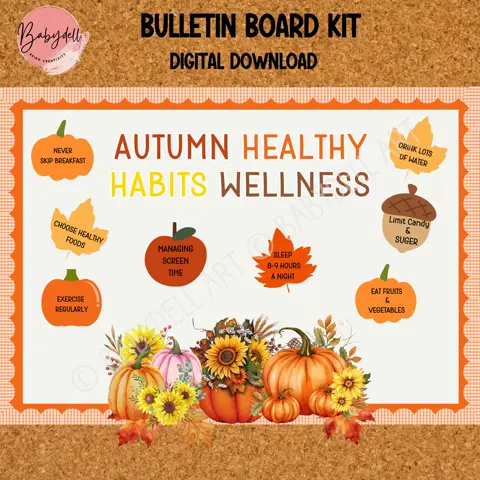
A wellness bulletin board works best when students can remember and use the message. Choose a small group of school-appropriate habits, such as washing hands, covering coughs, drinking water, getting enough rest, moving safely, and telling an adult when they feel unwell.
Keep statements short and positive. Pair each habit with a clear visual and avoid medical claims or instructions that belong to a healthcare professional. Follow your school’s approved health guidance.
Use fall imagery to organize information
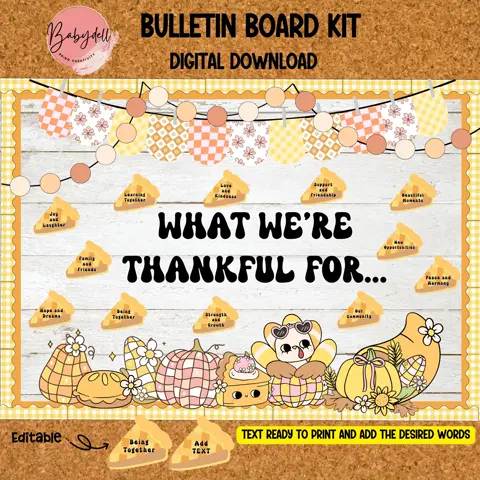
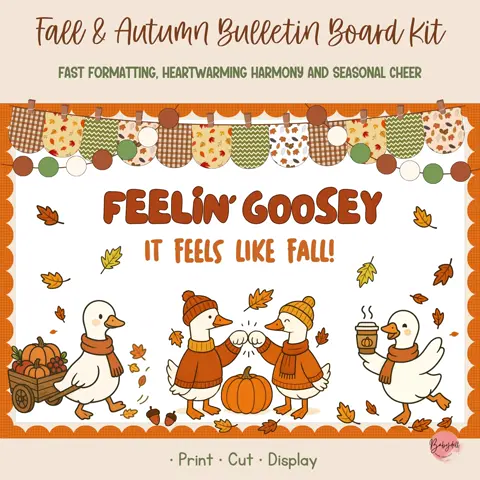
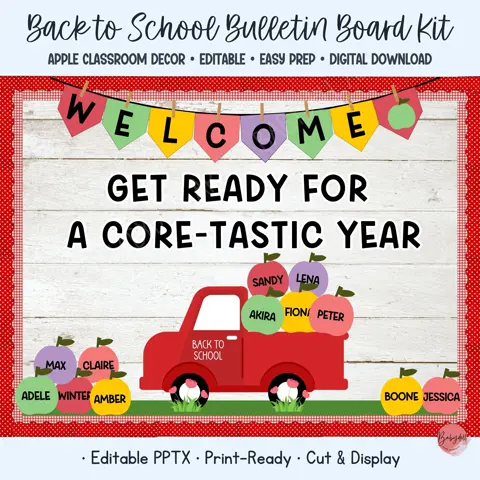
Pumpkins, leaves, apples, cozy clothing, or a harvest truck can divide the board into sections without making wellness feel clinical. Assign one action to each large shape and use consistent icons or headings throughout the display.
Strong contrast is especially important in a hallway or nurse office. Use large type, plain language, and enough open space for each message to stand on its own.
Add an age-appropriate interactive piece
Students can sort example habits, add a leaf describing a healthy classroom choice, or respond to a weekly reflection prompt. Keep participation general and never ask students to display private health information.
For younger learners, review one visual during morning meeting. Older students can evaluate scenarios or create concise wellness reminders for the school community, subject to teacher or nurse review.
Keep the display accurate and useful
Ask the school nurse or appropriate staff member to review health-related wording before posting. Replace damaged pieces and update any guidance that changes. A beautiful display should never preserve outdated instructions.
At the end of the season, store the reusable artwork separately from information cards. This makes it easier to revise the educational content next year while reusing the fall design elements.