Begin with one clear purpose
The strongest fall bulletin board starts with a job to do. It might welcome students, celebrate kind choices, display writing, recommend books, or make a hallway feel more seasonal. Choosing the purpose first keeps the design focused and helps you decide which pieces deserve the most space.
Write the main message in a few words and make it readable from across the room. Add only the supporting elements that help students understand or participate. A clear headline, two or three larger illustrations, and a place for student contributions often create more impact than dozens of small decorations.
Explore ten classroom-friendly directions
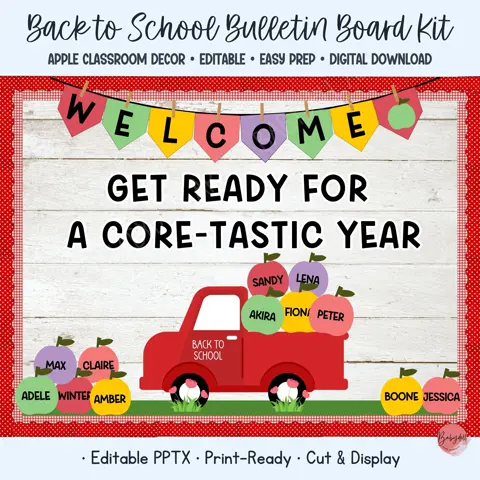
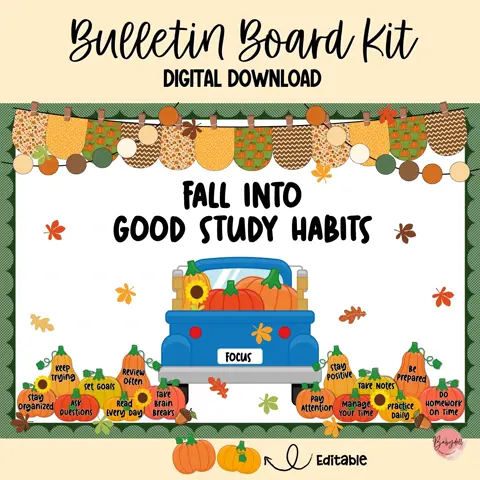
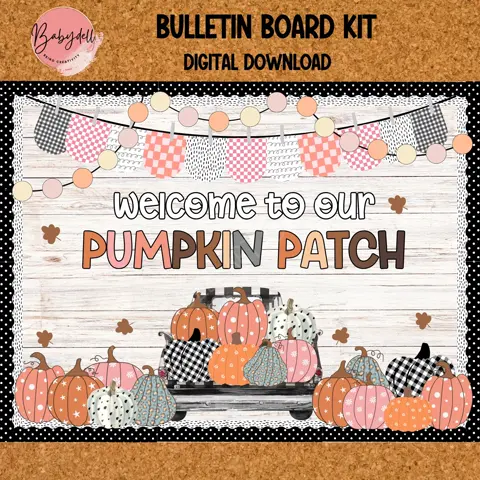
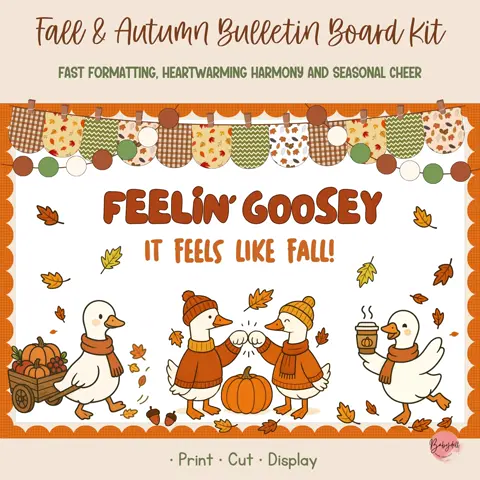
Useful themes include a pumpkin patch of student names, an apple harvest of goals, a cozy reading corner, woodland animals, colorful autumn leaves, a gratitude tree, a good-habits garden, a sweater-weather welcome, a student shout-out board, and a scarecrow writing display. Each idea can work on a bulletin board, classroom door, or hallway panel.
Choose a direction that supports your classroom routines. A reading board can hold recommendations, a gratitude display can grow through November, and a name-based pumpkin patch can begin as a welcome board before becoming a place for student work.
Build a balanced autumn palette
Traditional orange, rust, mustard, brown, and deep green create a recognizable fall look. For a softer room, use cream, sage, dusty blue, peach, and muted pumpkin. A retro classroom can combine terracotta, pink, golden yellow, and warm teal without losing the seasonal feeling.
Repeat the same three to five colors in the headline, border, and larger accents. Leave open background around student work so the display remains easy to scan. If the artwork is detailed, use a simple border; if the central pieces are minimal, a patterned border can add energy.
Make the display last through November
Design the base so only one section needs to change. Keep the border, large autumn artwork, and neutral headline in place, then rotate student names, writing prompts, book reviews, kindness notes, or seasonal vocabulary. This approach saves preparation time and gives students a reason to keep looking at the board.
Before taking the display down, photograph the finished layout and store the pieces by size in labeled envelopes. Add a note about the board dimensions and any pieces that need reprinting. A small amount of organization now turns next year’s fall setup into a much faster project.